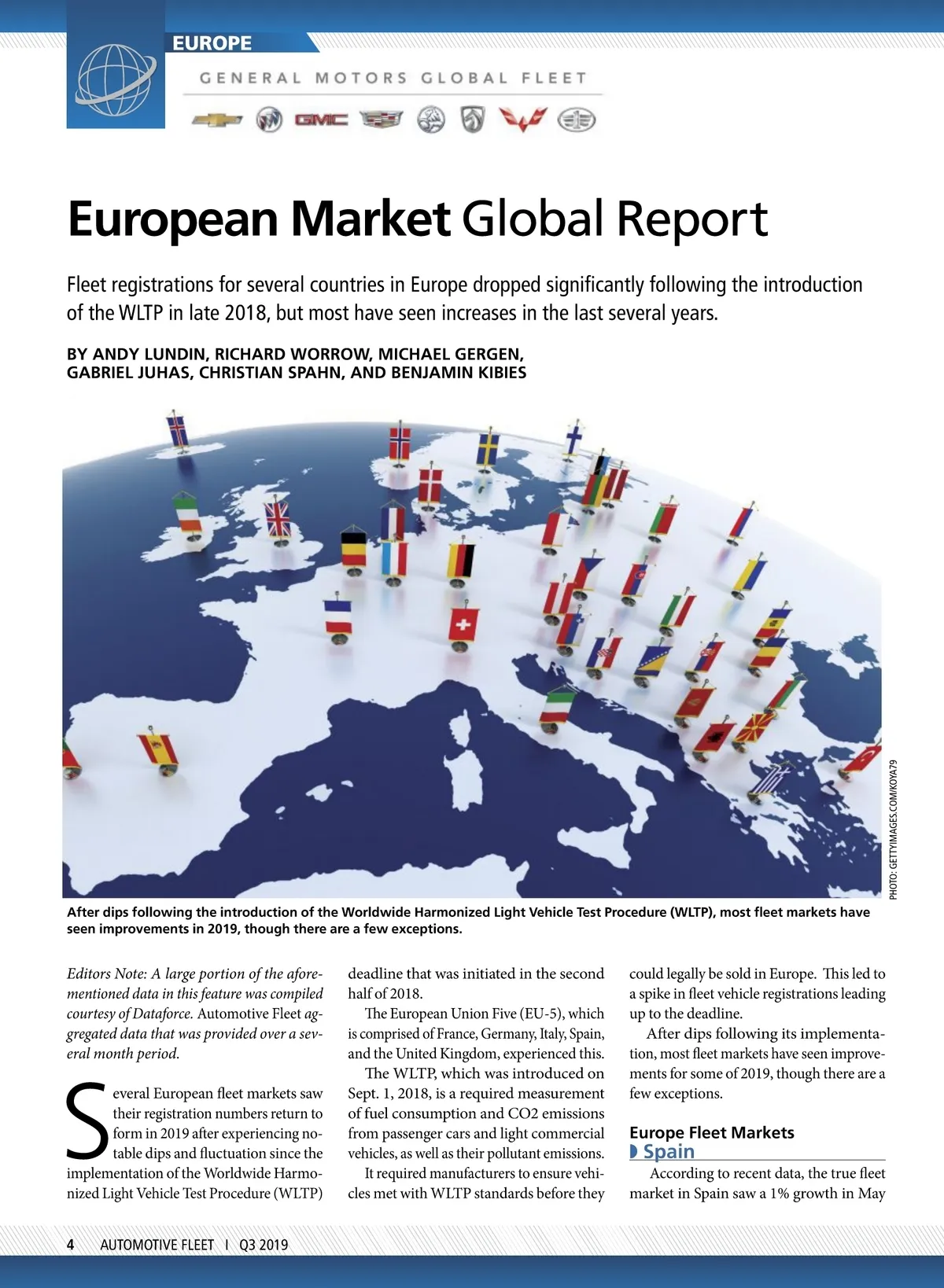
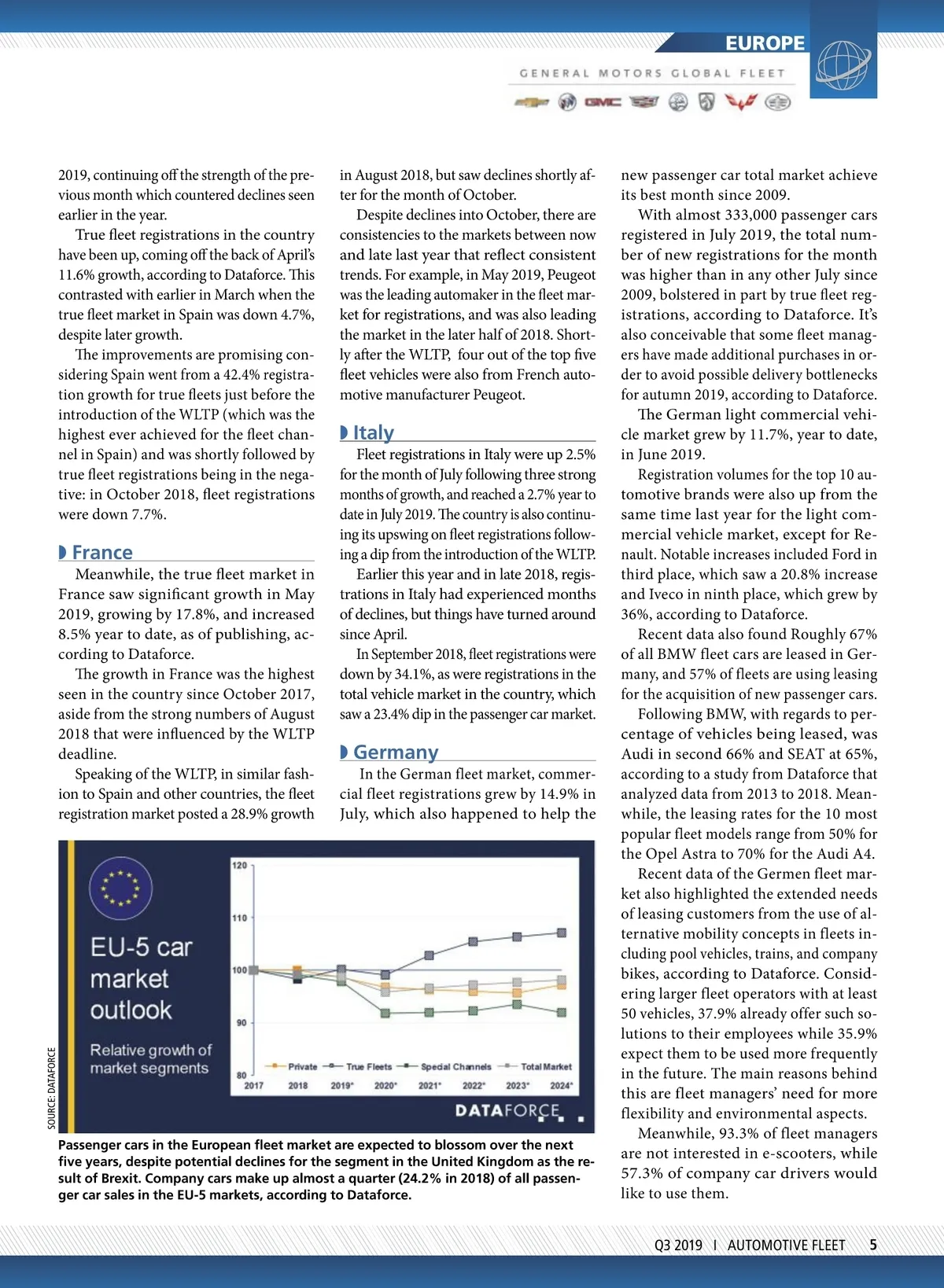
EUROPE 2019, continuing of the strength of the pre-vious month which countered declines seen earlier in the year. True leet registrations in the country have been up, coming of the back of April’s 11.6% growth, according to Dataforce. his contrasted with earlier in March when the true leet market in Spain was down 4.7%, despite later growth. he improvements are promising con-sidering Spain went from a 42.4% registra-tion growth for true leets just before the introduction of the WLTP (which was the highest ever achieved for the leet chan-nel in Spain) and was shortly followed by true leet registrations being in the nega-tive: in October 2018, leet registrations were down 7.7%. in August 2018, but saw declines shortly af-ter for the month of October. Despite declines into October, there are consistencies to the markets between now and late last year that relect consistent trends. For example, in May 2019, Peugeot was the leading automaker in the leet mar-ket for registrations, and was also leading the market in the later half of 2018. Short-ly ater the WLTP, four out of the top ive leet vehicles were also from French auto-motive manufacturer Peugeot. ◗ Italy Fleet registrations in Italy were up 2.5% for the month of July following three strong months of growth, and reached a 2.7% year to date in July 2019. he country is also continu-ing its upswing on leet registrations follow-ing a dip from the introduction of the WLTP. Earlier this year and in late 2018, regis-trations in Italy had experienced months of declines, but things have turned around since April. In September 2018, leet registrations were down by 34.1%, as were registrations in the total vehicle market in the country, which saw a 23.4% dip in the passenger car market. ◗ France Meanwhile, the true leet market in France saw signiicant growth in May 2019, growing by 17.8%, and increased 8.5% year to date, as of publishing, ac-cording to Dataforce. he growth in France was the highest seen in the country since October 2017, aside from the strong numbers of August 2018 that were inluenced by the WLTP deadline. Speaking of the WLTP, in similar fash-ion to Spain and other countries, the leet registration market posted a 28.9% growth ◗ Germany In the German fleet market, commer-cial fleet registrations grew by 14.9% in July, which also happened to help the Passenger cars in the European leet market are expected to blossom over the next ive years, despite potential declines for the segment in the United Kingdom as the re-sult of Brexit. Company cars make up almost a quarter (24.2% in 2018) of all passen-ger car sales in the EU-5 markets, according to Dataforce. new passenger car total market achieve its best month since 2009. With almost 333,000 passenger cars registered in July 2019, the total num-ber of new registrations for the month was higher than in any other July since 2009, bolstered in part by tr ue leet reg-istrations, according to Dataforce. It’s also conceivable that some leet manag-ers have made additional purchases in or-der to avoid possible delivery bottlenecks for autumn 2019, according to Dataforce. he German light commercial vehi-cle market grew by 11.7%, year to date, in June 2019. Registration volumes for the top 10 au-tomotive brands were also up from the same time last year for the light com-mercial vehicle market, except for Re-nault. Notable increases included Ford in third place, which saw a 20.8% increase and Iveco in ninth place, which grew by 36%, according to Dataforce. Recent data also found Roughly 67% of all BMW fleet cars are leased in Ger-many, and 57% of fleets are using leasing for the acquisition of new passenger cars. Following BMW, with regards to per-centage of vehicles being leased, was Audi in second 66% and SEAT at 65%, according to a study from Dataforce that analyzed data from 2013 to 2018. Mean-while, the leasing rates for the 10 most popular fleet models range from 50% for the Opel Astra to 70% for the Audi A4. Recent data of the Germen fleet mar-ket also highlighted the extended needs of leasing customers from the use of al-ternative mobility concepts in fleets in-cluding pool vehicles, trains, and company bikes, according to Dataforce. Consid-ering larger fleet operators with at least 50 vehicles, 37.9% already offer such so-lutions to their employees while 35.9% expect them to be used more frequently in the future. The main reasons behind this are fleet managers’ need for more flexibility and environmental aspects. Meanwhile, 93.3% of fleet managers are not interested in e-scooters, while 57.3% of company car drivers would like to use them. Q3 2019 I AUTOMOTIVE FLEET 5 SOURCE: DATAFORCE
Automotive Fleet Nov 2019: 5